Showing posts with label signaling. Show all posts

Tuesday, September 11, 2012

Nitric oxide: role in Cardiovascular health and disease

Authour/Curator: Aviral Vatsa PhD MBBS

This post is in continuation with posts on basics of NO metabolism and its effect on physiology. Other topics are covered under the following posts.

  1. Nitric Oxide and Platelet Aggregation

  2. Inhaled NO in Pulmonary Artery Hypertension and Right Sided Heart Failure

  3. Cardiovascular Disease (CVD) and the Role of agent alternatives in endothelial Nitric Oxide Synthase (eNOS) Activation and Nitric Oxide Production

  4. Nitric Oxide in bone metabolism

  5. Nitric oxide and signalling pathways

  6. Rationale of NO use in hypertension and heart failure

Nitric oxide plays wide variety of roles in cardiovascular system and acts as a central point for signal transduction pathway in endothelium. NO modulates vascular tone, fibrinolysis, blood pressure and proliferation of vascular smooth muscles. In cardiovascular system disruption of NO pathways or alterations in NO production can result in preponderance to hypertension, hypercholesterolemia, diabetes mellitus, atherosclerosis and thrombosis. The three enzyme isoforms of NO synthase family are responsible for generating NO in different tissues under various circumstances. The endothelial NOS (eNOS) is expressed in endothelial cells, the inducible NOS (iNOS) is expressed in macrophages and neuronal NOS (nNOS) is expressed in certain neurons and skeletal muscle. Although the basic mechanism of action for NO production is the same for all three NOS isoforms, yet deficiencies of each one of them manifest differently or with varying severity in the body e.g. eNOS deficiency might lead to hypertension, more severe form of vascular injury to cerebral ischaemia and more severe form of atherosclerosis induced by hypercholesterolemic diet whereas nNOS deficiency might show less severe form of vascular injury to cerebral ischaemia and absence of iNOS might lead to reduced hypotension in septic shock.

Reduction in NO production is implicated as one of the initial factors in initiating endothelial dysfunction. This reduction could be due to

  • reduction in eNOS production

  • reduction in eNOS enzymatic activity

  • reduced bioavailability of NO

eNOS production is increased by physiological sheer stress on endothelial cells resulting from normal flow of blood along the arterial walls. Alterations in fluid sheer stress patterns e.g due to arterial constriction has been shown to have detrimental effect on eNOS production in endothelial cells. eNOS production is decreased by LDL, angiotensin II and TNF alpha. eNOS is tightly coupled enzyme and its activity can be significantly reduced by reduction in availability of cofactors and substrates, and by competitive inhibitors such as ADMA. Furthermore, uncoupling of eNOS can result in increased production of reactive species of both oxygen (superoxide) and nitrogen (peroxinitrite), which inturn can further reduce eNOS bioavailability. A range of therapeutic targets aim at increasing bioavailability of eNOS and they are summarised here.

Increased production of ROS and peroxinitrite is associated with endothelial dysfunction. Coronary heart disease risk factors may increase NOS mediated ROS formation and peroxinitrite formation. Such risk factors are associated with decreased NO production levels in the vasculature. However, recent data suggests that reduction in bioavailable NO levels in the arteries could be due to increased local oxidative stress rather than reduction in basal NO production.

Oxidation dependent mechanisms have been implicated in endothelial dysfunction. Oxidized low density lipo-proteins (oxLDL) play an important role in early endothelial dysfunction and hence early atherosclerosis (see figure below)
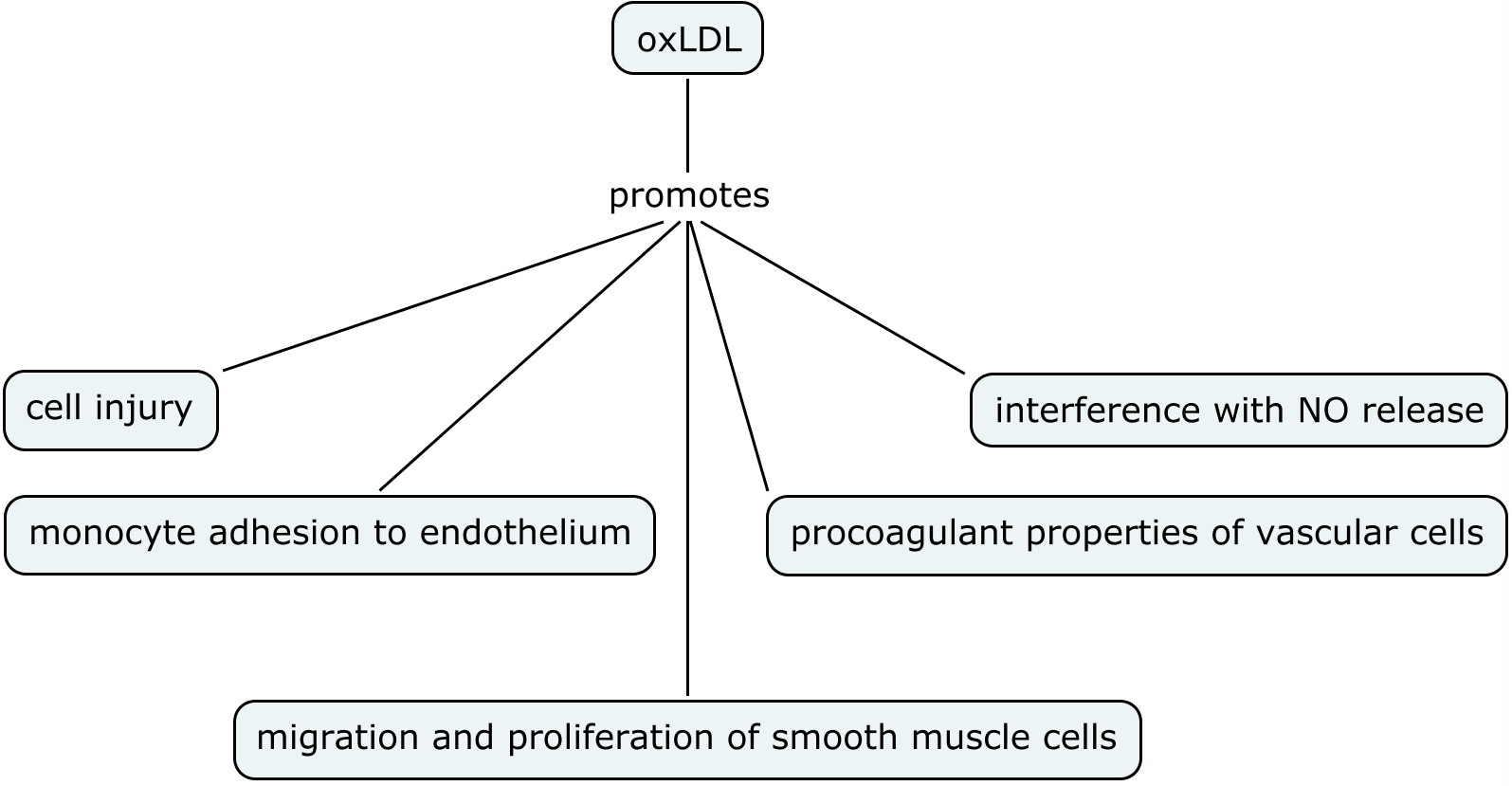
oxLDL can uncouple eNOS and reduced uptake of L-ariginine that can lead to production of superoxide radical oxygen. OxLDL can interfere with NO production and lead to altered NO signalling in the vascular endothelium. In addition, different arteries can be affected differently by these physiological changes e.g. oxLDL affects carotid artery and not the basilar artery thereby implying that intracranial arteries might be protected from endothelium-mediated oxidative injury and hence atherosclerosis. And finally NO can modulate oxidation mediated apoptotic signals in the vessel wall. Hence atherosclerosis can result from the derangement of fine imbalance between NO bioavailability and local oxidative stress.

Therapeutic targets:

There are various pathways being targeted to modulate the bioavailability of eNOS and NO such as

  1. Recoupling of eNOS to cofactors and substrates

  2. Modulation of eNOS activity by genomic and non genomic mechanisms e.g. by statins, ACE inhibitors, angiotensin II receptor blockers, calcium channel blockers , KLF2 modulators

  3. The suppression of inflammatory signalling pathways by PPAR-α activation

  4. Modulation of caeviolin mediated endocytosis and thus dissociation of eNOS from caevolin

The above list is not exhaustive, but this post here summarises recent developments in therapeutic targets in NO /eNOS regulation.

Based on:

Nitric Oxide and Pathogenic Mechanisms Involved in the Development of Vascular Diseases

Claudio Napoli and Louis J. Ignarro

Arch Pharm Res Vol 32, No 8, 1103-1108, 2009 , DOI 10.1007/s12272-009-1801-1 


Thursday, August 23, 2012

Nitric Oxide Signalling Pathways

Curator/ Author: Aviral Vatsa, PhD, MBBS

In continuation with the previous posts that dealt with short history and chemistry of nitric oxide (NO), here I will try to highlight the pathways involved in NO chemical signalling.

NO is a very small molecule, with a short half life (<5 sec). It diffuses rapidly to its surroundings and is metabolised to nitrites and nitrates. It can travel short distances, a few micrometers, before it is oxidised. Although it was previously believed that NO can only exert its effect for a very short time as other nitrogen oxides were believed to be biologically inert. Recent data suggests that other NO containing compounds such as S- or N-nitrosoproteins and iron-nitrosyl complexes can be reduced back to produce NO. These NO containing compounds can serve as storage and can reach distant tissues via blood circulation, remote from their place of origin. Hence NO can have both paracrine and 'endocrine' effects.

Intracellularly the oxidants present in the cytosol determine the amount of bioacitivity that NO performs. NO can travel roughly 100 microns from NOS enzymes where it is produced. NOS enzymes on the other hand are localised to specific sub-cellular areas, which have relevant proteins in the vicinity as targets for signalling.

NO signalling occurs primarily via three mechanisms (according to Martínez-Ruiz et al):

  1. Classical: This occurs via soluble guanylyl cyclase (sGC). Once NO is produced by NOS it diffuses to sGC intracellularly or even in other cells. SGC is highly sensitive for NO, even nanomolar amounts of NO activates sGC, thus making it a potent target for NO in signalling pathways. sGC in turn increases the conversion of GTP to cGMP. cGMP further mediates the regulation of contractile proteins and gene expression pathways via cGMP-activated protein kinases (PKGs). cGMPs cause confirmational changes in PKGs. Signalling by cGMP is terminated by the action of phosphodiestrases (PDEs). PDEs have become major therapeutic targets in the upcoming exciting research projects.
  2. Less classical: Within the mitochondria NO can compete with O2 and inhibit cytochrome c oxidase (CcO) enzyme. This is a reversible inhibition that depends on O2and NO concentrations and can occur at physiological levels of NO. Various studies have demonstrated that endogenously generated NO can inhibit respiration or that NOS inhibitors can increase respiration at cellular, tissue or whole animal level. Although the exact mechanism of CcO inhibition of NO is still debated, NO-CcO interaction is considered important signalling step in a variety of functions such as inhibition of mitochondrial oxidative phosphorylation, apoptosis and reactive oxygen species (ROS) generation. Interestingly, at higher concentration (~1nM) NO can cause irreversible inhibition of cellular oxidation by reversible and/or irreversible damage to the mitochondrial iron–sulfur centers,In addition to the above mentioned pathways, NO (along with AMP, ROS and O2), can also activate AMP- activated protein kinase (AMPK), an enzyme that plays a central role in regulating intracellular energy metabolism. NO can also regulate hypoxia inducible factor (HIF), an O2-dependent transcription factor that plays a key role in cell adaptation to hypoxia .
  3. Non- classical: S-nitrosylation or S-nitrosation is the covalent insertion of NO into thiol groups such as of cysteine residues of proteins. It is precise, reversible, and spatiotemporally restricted post translational modification. This chemical activity is dependent upon the reactivity between nitrosylating agent (a small molecule) and the target (protein residue). It might appear that this generic interaction results in non-specific, wide spread chemical activity with various proteins. However, three factors might determine the regulation of specificity of s-nitrosylation for signalling purposes:
  • Subcellular compartmentalisation: high concentrations of nitrosylating agents are required in the vicinity of target residues, thus making it a specific activity.
  • Site specificity: certain cysteine residues are more reactive in specific protein microenvironments than others, thus favouring their modification. As a result under physiological conditions only a specific number of cysteine residues would be modified, but under higher NO levels even the slow reacting ones would be modified. Increased impetus in research in this area to determine protein specificity to s-nitrosylation provides huge potential in discovering new therapeutic targets.
  • Denitrosylation: different rates of denitrosylation result in s-nitrosylation specificity.

Other modifications in non classical NO mechanisms include S-glutathionylation and tyrosine nitration

Peroxynitrite: It is one of the important reactive nitrogen species that has immense biological relevance. NO reacts with superoxide to form peroxynitrite. Production of peroxynitrite depletes the bioactivty of NO in physiological systems. Peroxynitrite can diffuse through membranes and react with cellular components such as mitochondrial proteins, DNA, lipids, thiols, and amino acid residues. Peroxynitrite can modify proteins such as haemoglobin, myoglobin and cytochrome c. it can alter calcium homeostasis and promote mitochondrial signalling of cell death. However, NO itself in low concentrations have protective action on mitochondrial signalling of cell death.

More details about various aspects of NO signalling can be obtained from the following references.

The post is based on the following Sources:

  1. http://www.sciencedirect.com/science/article/pii/S089158491100236X

    http://dx.doi.org/10.1016/j.freeradbiomed.2011.04.010

  2. http://content.karger.com/produktedb/produkte.asp?doi=338150

    Cardiology 2012;122:55-68 (DOI: 10.1159/000338150)

  3. http://content.onlinejacc.org/article.aspx?articleid=1137266

     J Am Coll Cardiol. 2006;47(3):580-581. doi:10.1016/j.jacc.2005.11.016

  4. http://goo.gl/y6oY3


In addition, other aspects of NO involvement in biological systems in humans are covered in the following posts on this site:

  1. Nitric Oxide and Platelet Aggregation
  2. Inhaled NO in Pulmonary Artery Hypertension and Right Sided Heart Failure
  3. Cardiovascular Disease (CVD) and the Role of agent alternatives in endothelial Nitric Oxide Synthase (eNOS) Activation and Nitric Oxide Production
  4. Nitric Oxide in bone metabolism

Saturday, August 11, 2012

Nitric Oxide: Chemistry and function

Curator/Author: Aviral Vatsa PhD, MBBS

Nitric oxide is one of the smallest molecules involved in physiological functions in the body. It is a diatom and thus seeks formation of chemical bonds with its targets rather than structure-function configuration of say protein receptors. Nitric oxide can exert its effects principally by two ways:

  • Direct
  • Indirect

Direct actions, as the name suggests, result from direct chemical interaction of NO with its targets e.g. with metal complexes, radical species. These actions occur at relatively low NO concentrations (<200 nM)

Indirect actions result from the effects of reactive nitrogen species (RNS) such as NO2 and N2O3. These reactive species are formed by the interaction of NO with superoxide or molecular oxygen. RNS are generally formed at relatively high NO concentrations (>400 nM)

Credits: Nitric Oxide: Biology and Pathobiology By Louis J. Ignarro

Credits: Nitric Oxide: Biology and Pathobiology By Louis J. Ignarro

Although it can be tempting for scientists to believe that RNS will always have deleterious effects and NO will have anabolic effects, this is not entirely true as certain RNS mediated actions mediate important signalling steps e.g. thiol oxidation and nitrosation of proteins mediate cell proliferation and survival, and apoptosis respectively. As depicted in the figure above, NO concentration determines the action it exerts on different proteins. This is highlighted in the following examples from different studies:

  • Cells subjected to NO concentration between 10-30 nM were associated with cGMP dependent phosphorylation of ERK
  • Cells subjected to NO concentration between 30-60 nM were associated with Akt phosphorylation
  • Concentration nearing 100 nM resulted in stabilisation of hypoxia inducible factor-1
  • At nearly 400 nM NO, p53 can be modulated
  • >1μM NO, it nhibits mitochondrial respiration

Besides the concentration, duration of NO exposure also determines how proteins respond to NO. Hence proteins can be 'immediate' responders or 'delayed' responders. The response can be either 'transient' (short lived) or 'sustained' (prolonged). Different proteins fall into these different categories. These are not rigid categories rather a functional 'classification'.

Endogenously generated NO concentration ranges from 2 nM as in endothelial cell to >1 μM in a fully activated macrophage. This wide range, along with the unique chemical reactivity of NO offers immense versatility to the physiological effects that it can exert in different cellular milieu in the body.

In addition to the concentration-dependent effects, other factors that determine the local cellular/tissue milieu add to the complexities involved with signal transduction undertaken by NO. These factors are

  • rate of NO production
  • diffusion distance
  • rates of consumption
  • reactivity of RNS with molecular targets.

These kinetic determinants play vital role in physiological functions and disease states.

Although it is not possible to detail the modes of modulation of biological functions by NO in a short post, but I hope the post gives a taste of the intricacies involved with NO functions and that there are various parameters that determine the exact role of NO in a biological milieu.

Sources

http://www.pnas.org/content/101/24/8894.short

http://onlinelibrary.wiley.com/doi/10.1002/ijc.22336/full

http://cancerres.aacrjournals.org/content/67/1/289.short

http://www.sciencedirect.com/science/article/pii/S0005272806000417

http://goo.gl/eVXFh

Monday, August 6, 2012

Nitric Oxide: a short historic perspective


Author/Curator: Aviral Vatsa PhD, MBBS
Nitric oxide (NO) is of extreme biological interest due to its wide range of physiological functions in almost all the human systems. For long it has been of vital interest to chemists, environmental scientists, metallurgists and other domains. It is only recently that the world of biology has discovered the ubiquitous presence of this small molecule in human body and the scientific exploration of its effects has grown ever since. It was only in 1980s that three different groups demonstrated that NO is indeed produced by mammalian cells and that NO has specific biological roles in the human body. These studies highlighted the role of NO in cardiovascular, nervous and immune systems. In cardiovascular system NO was shown to cause relaxation of vascular smoth muscle cells causing vasodilatation, in nervous system NO acts as a signalling molecule and in immune system it is used against pathogens by the phagocytosing cells. These pioneering studies opened the path of investigation of role of NO in biology. In 1998, three scientists, Robert F Furchgott, Louis J Ignarro, and Ferid Murad, were awarded Nobel Prize for their discoveries concerning 'nitric oxide as a signalling molecule'.
Since then hundreds and thousands of publications have appeared in the scientific literature. These studies have attributed a wide range of biological functions to NO. A few important examples are:
  • toxic free radical causing injury to proteins, lipids and DNA
  • mediator of synaptic plasticity
  • intercellular neuronal signalling molecule
  • pro and anti inflammatory molecule
  • role in cell degeneration and ischaemia-reperfusion injury
  • role in atherosclerosis and inherited motor disorders
  • role in bone remodelling
The above list is by no means exhaustive, but it gives an idea about the ubiquitous involvement of NO in human systems.
Since NO has been implicated in various disease states, it has also been a prime target to achieve therapeutic benefits. Efforts are ongoing to investigate the therapeutic potential of NO in cardiovascular diseases, sepsis and shock, respiratory ailments, neuronal disease and bone conditions...just to name a few.
Although a lot of progress has happened in our understanding of this small molecule since its discovery, but still there are many challenges that the researchers face today while investigating NO. These are primarily because NO is metabolised very quickly (less than 5 sec) and it can diffuse freely across cellular membranes owing to its chemical structure. This is the precise reason why it can act as a potent signalling molecule across systems in the first place. New techniques are appearing to delineate the role of NO at sub-cellular level and have promising potential to aid NO research in the future.
In the future posts on this topic I will strive to cover different aspects of NO physiology and its role in various disease conditions, techniques for NO detection, signalling mechanism etc.

Sources:

Tuesday, July 27, 2010

Book Chapter - Mechanobiology of bone: From cell to organ


I am very pleased to post that the book containing a chapter authoured by myself and others has been released. This book entitled "Cell Mechanochemistry. Biological Systems and Factors Inducing Mechanical Stress, Such as Light, Pressure and Gravity " focuses on different aspects of cell mechanochemistry, mechanosensing and mechanotransduction.


Mechanobiology of bone: From cell to organ

Aviral Vatsa1, Theo H. Smit2 and Jenneke Klein-Nulend1


1Department of Oral Cell Biology, ACTA-University of Amsterdam and VU University Amsterdam Research Institute MOVE, Amsterdam, The Netherlands
2Department of Physics and Medical Technology, VU-University Medical Center, Vrije Universiteit, Research Institute MOVE, Amsterdam The Netherlands


Abstract. Bone is a dynamic tissue that adapts its mass and architecture in accordance with the external mechanical loads, which it experiences during daily life. Bones maintain a balance of toughness and light weight by a process of repeated turnover, wherein old and/or damaged bone is resorbed from the areas which are mechanically ‘unloaded’ and/or damaged, and deposited in the areas that experience increased mechanical loading. This precise phenomenon is achieved by the concerted activity of osteocytes, osteoblasts, and osteoclasts. Osteocytes sense the mechanical loads and transduce the mechanical signals into bio-molecules, which then orchestrate the activity of bone forming osteoblasts and/or bone resorbing osteoclasts. Recent years have seen a surge in the scientific efforts to better understand this intricate phenomenon of bone remodeling, both at the tissue level and at a single cell level. These new discoveries unravel the complexities involved in maintenance of bone physiology and hence pave a path in devising new therapeutic targets for bone repair and regeneration. In this chapter, we highlight the latest developments in bone remodeling and reflect on their connection with the historic perspective of bone adaptation to external mechanical loading.
Related Posts Plugin for WordPress, Blogger...